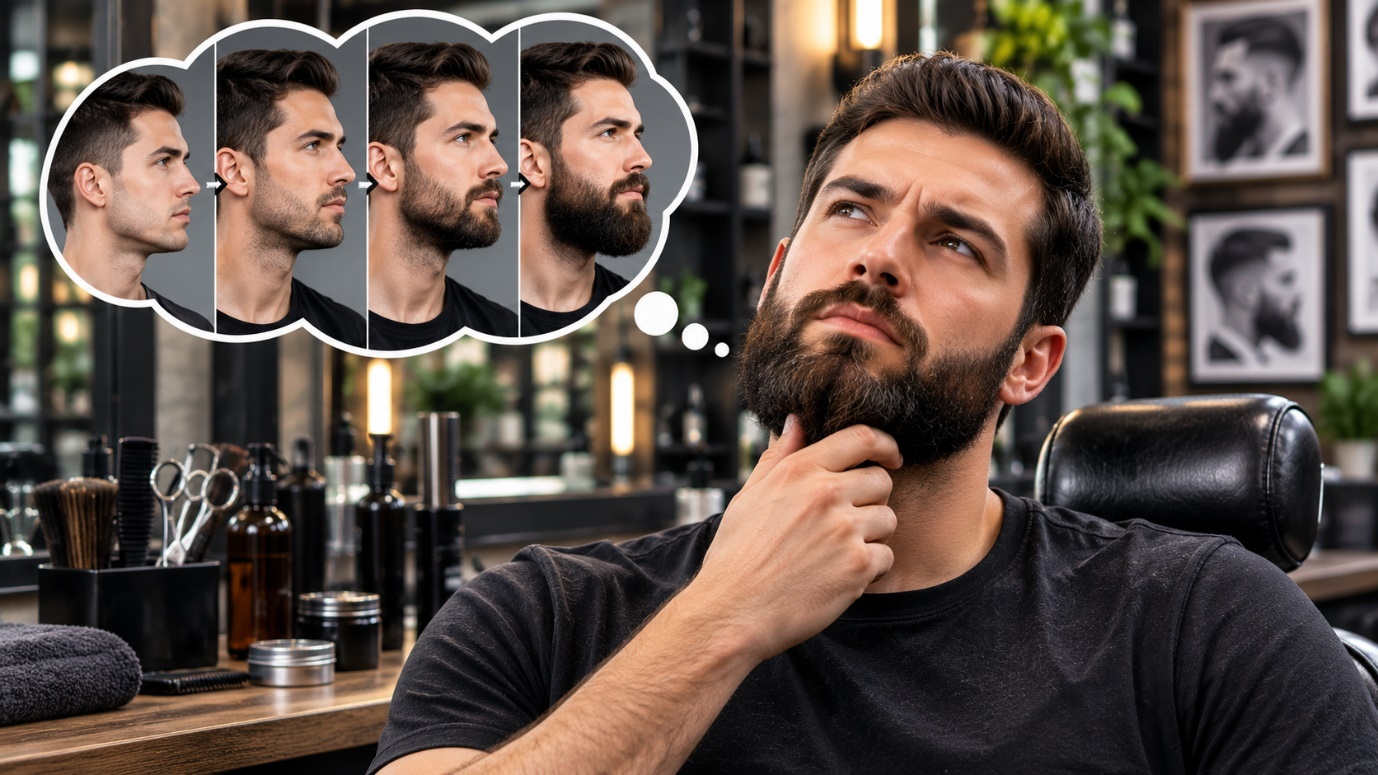
You’ve stopped shaving for two weeks, and you’re already checking the mirror like something’s supposed to happen overnight. Relax. If you’re wondering how long it takes to grow a full beard, the honest answer isn’t the one influencers post about. It takes real time, real patience, and a lot less controlling than most guys think.
Growing a beard isn’t a straight line either. It’s patchy, uneven, and full of stages that feel like nothing’s happening until suddenly something is. Let’s break down what’s going on under there.
What Makes Up Your Personal Timeline
Genetics runs the show here. Full stop. Your growth rate, your density, your patch patterns, all of it traces back to hormones and genetics you inherited, not how many vitamins you took this month or how often you skip shaving.
Testosterone and DHT levels play the biggest role, along with how sensitive your hair follicles are to those hormones. Some guys hit full coverage in eight weeks. Others need four months just to connect their mustache to their chin.
Neither one is wrong; it’s just biology doing its thing at its own pace.
Breaking Down the Actual Growth Stages
Knowing what’s supposed to happen at each stage keeps you from panicking two weeks in when things look rough.
| Stage | Timeframe | What’s Happening |
| Stubble | Week 1 to 2 | Short, uneven growth starts appearing |
| Patchy phase | Week 3 to 4 | Uneven density becomes obvious; some spots lag |
| Filling in | Week 5 to 8 | Patches start connecting, shape begins forming |
| Near full | Week 8 to 12 | Most areas fill in, length becomes noticeable |
| Mature beard | 3 to 6 months | Full density reached, texture settles |
So when people ask how long it takes to grow a full beard, the real answer usually lands somewhere in that three-to-six-month window, not the six weeks Instagram makes it look like.
Why the Patchy Phase Feels Way Worse Than It Is

Week three is brutal for most guys. This is where a lot of beards get shaved off way too early out of pure frustration. Here’s the thing, though: patchiness at this stage doesn’t mean patchiness forever.
- Cheek and jaw areas typically fill in slower than the chin and mustache.
- Uneven density at week three often evens out significantly by week eight.
- Trimming too early can make patches look worse, not better.
- Comparing your timeline to someone else’s genetics is a losing game.
Pushing through this stage and not reaching for the razor is honestly half the battle.
Does Anything You Do Speed This Up
Kind of, but don’t expect miracles. If you’re wondering how long it takes to grow a full beard, nothing’s going to double your growth rate overnight, but a few habits can support healthier, fuller-looking growth over time.
- Keeping the skin underneath clean and moisturized supports follicle health.
- A well-rounded, nutritious diet enriched in protein and vitamins gives your body what it needs to grow hair efficiently.
- Reducing stress matters more than people expect, since chronic stress can disrupt healthy hair cycles.
- Sleep quality plays a role too, since a lot of hormone regulation happens overnight.
None of this changes your genetics, but it does help you grow the fullest version of whatever your genetics already have planned.
Why Trimming Too Early Sabotages Your Own Progress
This is the mistake we see constantly. Guys hit week four, panic about unevenness, and start trimming random spots to try and even things out. That usually backfires, since cutting shorter areas even shorter just makes the imbalance more obvious instead of less.
The smarter move is holding off on any real shaping until you’re at least six to eight weeks in, once you can see your full pattern. When you’re ready, a professional beard trim does more good in fifteen minutes than months of random at-home trimming ever will.
When Patchiness Sticks Around Longer Than Expected
Sometimes patches don’t fill in the way you’re hoping, even after a few months. When it comes to how long it takes to grow a full beard, there isn’t one timeline that works for everyone. That’s not necessarily a dead end. It may just mean your growth strategy needs adjusting.
- Certain areas may grow slower and need extra time before judging the result.
- Strategic trimming can create the illusion of fuller coverage in sparse zones.
- A well-defined neckline and cheek line make a patchy beard look intentional instead of unfinished.
- Some guys genuinely have permanent gaps, and working with a stylist to design around that beats fighting it forever.
How Your Overall Grooming Routine Supports the Process
Growing a beard isn’t just about waiting it out. Keeping your whole look sharp while you wait makes the in-between stages way more bearable. Regular visits for a haircut keep your overall style looking intentional, even while your beard’s still figuring itself out underneath.
Talk to Warrington Barber Shop About Your Beard Journey
Whether you’re three weeks in and questioning everything or three months in and ready to shape things up, Warrington Barber Shop has seen every stage of the process.
There’s no one-size-fits-all answer to how long it takes to grow a full beard, so we’ll help you figure out what your growth pattern is doing and how to work with it, not against it.
Set up an appointment today and let’s get your beard where it needs to be.
FAQs
Is it considered normal if my beard grows unevenly?
Yes, uneven growth in the early weeks is extremely common and usually evens out significantly as your beard matures.
Should I use minoxidil to speed up beard growth?
Some guys see results, but it requires consistent use and isn’t guaranteed to work the same for everyone.
Can shaving make my beard grow back thicker?
No, this is a myth. Shaving doesn’t change hair thickness or growth rate at the follicle level.
What age does beard growth typically peak?
Most guys see their fullest growth potential between their late twenties and mid-thirties as testosterone levels stabilize.
Is it okay to shave off a patchy beard and start over?
You can, but patience usually pays off more since most patchiness improves significantly given enough time.

