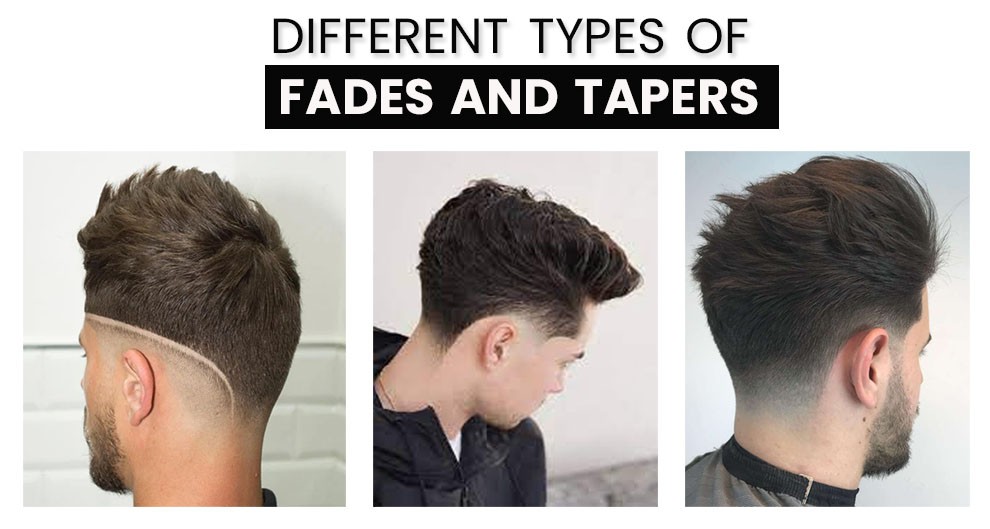
When you search for the different kinds of fades, you’ll usually get the same recycled breakdown: low is subtle, high is bold, and skin goes to the scalp. That’s surface-level.
What actually matters, and what we focus on at Warrington Barber Shop, is how each fade sits on your head, how it interacts with your bone structure, and how it grows out after day ten.
Because two men can ask for the same “mid fade” and walk out with completely different results. And that’s not a mistake. That’s design.
Let’s break this down the way a real barber thinks about it.
The Real Difference Between All Types of Fades
The biggest separator between the different kinds of fades isn’t just height. It’s where the transition crosses your parietal ridge, that slight curve where the sides of your head start rounding into the top.
That ridge is everything.
If we fade below it, you keep more structure on the sides. If we fade into or above it, we remove weight and create a stronger contrast.
That one decision changes your entire silhouette.
Low Fade to Control Width Without Collapsing Structure
A low fade stays under the parietal ridge. That means you keep more density through the upper sides.
Why does that matter to you? Because cutting too much too high can make your head look narrow, especially if you already have a slimmer face shape.
What We’re Really Doing With a Low Fade
- Preserving side structure.
- Softening contrast.
- Allowing a more forgiving grow-out.
- Keeping balance near the temples.
Low fades are strategic. They’re not just “less dramatic.” They’re ideal if:
- Your hair grows out fast and puffs at the ridge.
- You want your top to blend naturally into the sides.
- You prefer longer appointment spacing.
And here’s something to know about this look! Low fades photograph better in natural daylight because they rely on shadow gradients rather than harsh contrast.
Mid Fade Through the Ridge for Controlled Contrast
A mid-fade crosses directly into the parietal ridge. That’s why it feels sharper.
We’re intentionally breaking the visual weight at the widest part of your head.
This works especially well if:
- You want more separation between the top and the sides.
- You style your hair upward or forward.
- You have dense hair that builds bulk quickly.
The mid fade gives you structure without full removal.
But here’s the technical side: mid fades demand tighter guard transitions. If blending isn’t clean through that ridge area, you’ll see shelves or steps under certain lighting.
That’s why we refine mid fades using clipper-over-comb and micro guard adjustments. You don’t want visible transition lines once the initial sharpness softens.
High Fade to Emphasize the Crown
High fades climb above the ridge and head toward the crown. When you choose this, you’re asking us to remove the side frame almost entirely.
That does two things:
- It visually elongates your face.
- It forces all attention to the top.
If your top isn’t styled or shaped well, a high fade will expose that instantly.
This is why high fades work best when:
- You maintain strong top volume.
- You are comfortable with frequent upkeep.
- You prefer dramatic contrast.
High fades don’t just “look bold.” They demand structure on top to avoid imbalance.
Skin Fade That Sets the Gradient to Zero
A skin fade isn’t just about going bald at the bottom. It’s about compressing the gradient into a tighter visual space.
You’re shrinking the transition window.
That requires:
- Foil shavers for a smooth scalp finish.
- Zero-gapped clippers for precision.
- Careful pressure control to avoid irritation.
The tighter the gradient, the faster regrowth becomes noticeable.
Skin fades look stunning on day one. But by day twelve, you will see the contrast soften dramatically if you don’t maintain it.
If you’re choosing this style, you’re committing to maintenance.
Comparing the Different Kinds of Fades Based on Structure
Here’s a breakdown based on how each fade manipulates shape:
| Fade Type | Crosses Parietal Ridge? | Visual Effect | Grow-Out Behavior |
| Low Fade | No | Maintains width | Soft, gradual |
| Mid Fade | Yes (midpoint) | Defined contrast | Moderate sharpness loss |
| High Fade | Above ridge | Strong elongation | Fast structure shift |
| Skin Fade | Any height to zero | Maximum gradient compression | Quick regrowth visibility |
This is how we evaluate the different kinds of fades when you sit in the chair.
Growth Patterns Change the Outcome More Than You Think
If your hair grows forward near the temples or flares outward behind the ears, fade height alone won’t fix the imbalance. We adjust blending angles based on:
- Natural swirl at the crown.
- Temple recession patterns.
- Occipital bone projection.
- Density shifts.
All types of fades behave differently depending on these factors. A high fade on someone with strong crown growth can exaggerate separation if not blended correctly.
This is where barber experience is necessary.
Let’s Wrap Up
Now you understand the different kinds of fades beyond surface definitions.
- Low protects the width.
- Mid-fade balances structure.
- High removes the frame.
- Skin compresses contrast.
The right one for you depends on your head shape, growth patterns, and maintenance commitment, not just what’s trending.
If you’re ready for a fade that’s according to your proportions, not copied from a photo, it’s time to visit us at hair salon Warrington PA.
Book your appointment at Warrington Barber Shop today. Let’s design a fade that sharpens your profile and actually grows out the way it should.
FAQs About Different Kinds of Fades
1. Why does my fade look uneven after a week?
Hair doesn’t grow evenly across your head. Growth direction and density shifts can make certain areas appear heavier faster.
2. Can I switch from a low fade to a high fade in one visit?
Yes, but depending on the current length, we may need to reset the structure to avoid imbalance.
3. Why does lighting change how my fade looks?
Fades rely on shadow and contrast. Harsh lighting exposes blending mistakes, and soft lighting smooths them.
4. Do certain fades work better with beards?
Mid and low fades transition more naturally into fuller beards. High fades require tighter beard tapering to avoid disconnect.
5. Is a skin fade bad for sensitive skin?
Not if done properly. We use controlled pressure and high-quality foil shavers to reduce irritation, but hydration after your appointment is important.

