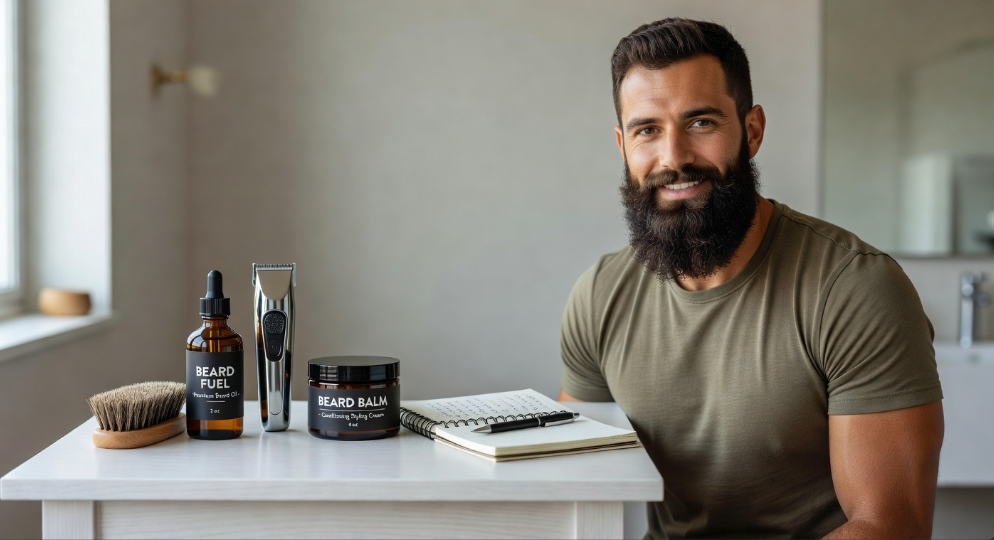
If you’re searching for how to grow a thicker beard, here’s the honest answer: genetics matter, but your routine still makes a huge difference. The right trimming, skin care, and daily habits can help your beard look fuller, lie better, and grow with fewer rough patches, especially if you’re dealing with dryness, breakage, or uneven growth.
Know What “Thicker” Really Means
Most guys mean one (or more) of these:
- More density: more hairs growing in (mostly genetics + age/hormones).
- Better coverage: patchy areas look less obvious because the beard is shaped well.
- More bulk: the beard looks bigger because it’s long enough to sit and stack.
A helpful reality check: beard hair growth is often cited around 0.38 mm per day (roughly “about half an inch a month”). So if your beard looks thin at week 2, that’s normal, it’s still early.
Use The 90-Day Beard Rule (And Don’t Judge It Too Soon)
The 90-day beard rule is a simple guideline: give your beard about 3 months to show its real pattern before you decide it “can’t fill in.” Early growth comes in uneven, cheeks, chin, and mustache rarely move at the same speed.
Cleveland Clinic also notes a small study where short-term sleep deprivation lowered the rate of beard growth, which is a good reminder that lifestyle can show up in your facial hair.
What to Do During the 90 Days
- Avoid constant picking and over-trimming (both lead to breakage and regret).
- Keep the mustache off the lip (clean look, less mess when eating).
- Do one professional shape-up so it grows in the right direction.
If you want your beard to look thicker while you’re growing it, book a beard trim. We’ll keep it clean and balanced without taking off more than needed.
Shape is the Fastest Way to Make a Beard Look Fuller
A beard can be growing fine and still look thin if the lines are working against you.
Two Common Mistakes
- Neckline shaved too high (removes the base that makes the beard look solid).
- Cheek line carved too low (makes the beard look narrow and patchier).
A clean outline + balanced bulk usually makes a bigger difference than waiting for “more growth.” If you like sharper edges, go with Beard Trim Shave + Line Up. It includes a hot towel treatment to soften hair and soothe skin.
Oils, Balms, and Brushing: What They Do (And What They Don’t)
Beard oil is great, but it’s not a magic growth product.
What Beard Oil Helps With
- Softer hair (less wiry, less itchy)
- Better shine and control
- Less breakage (so you keep more length)
What It Doesn’t Do
- It doesn’t create new follicles or “force” new hairs to grow.
Simple Daily Routine (2–3 Minutes)
- Pat dry after your shower.
- Apply a few drops of oil (more only if your beard is longer).
- Brush/comb downward in the direction of training and reduce tangles.
Keep The Skin Under the Beard Healthy (This Matters More Than Most Guys Think)
If the skin under your beard is irritated, flaky, or clogged, your beard rarely looks its best. Keep it basic:
- Clean the skin under the beard (especially after workouts).
- Light exfoliation 1–2x/week if you get ingrowns.
- If you get stubborn redness/flaking, a clinician can help rule out common issues like seborrheic dermatitis.
For a clean reset on the edges, a hot towel shave can help soften hair and leave skin feeling calmer. The straight-razor shaves are safe, and they use clean blades, proper technique, and soothing aftercare to reduce irritation.
Growth Tips That Actually Help In 2026
If you want thicker-looking facial hair, the basics beat hacks:
- Sleep
It affects recovery and hormone balance. The Cleveland Clinic specifically mentions sleep and beard growth rate. - Protein + balanced diet
Hair is protein-based; under-eating or nutrient gaps can show up in hair quality. - Consistency
Same routine, same direction, same schedule, beards reward steady habits.
Vitamins Are Useful If You’re Low, Not Magic If You’re Not
Biotin is the big one guys ask about. Two key points:
- The NIH Office of Dietary Supplements notes biotin deficiency is rare, and it also highlights that biotin supplements can interfere with certain lab tests.
- Mayo Clinic says claims that biotin treats hair loss haven’t been proven.
The FDA has also warned that biotin can interfere with lab tests and cause incorrect results.
If you’re going to use supplements, keep it reasonable and consider checking with a healthcare pro, especially if you get bloodwork done.
If Patchiness Is the Main Issue, Here Are Some Options That Can Help
Some patchiness fills in with time. Some doesn’t.
If you’re thinking about minoxidil, know this: it’s FDA-approved for scalp hair loss, and beard use is considered off-label. There is research interest in minoxidil for facial hair enhancement, but results and side effects vary, skin irritation is common, so it’s best discussed with a clinician.
Want a Thicker-Looking Beard Right Now? Get the Shape Right.
If you’re in Warrington, Pennsylvania, we can help your beard look fuller quickly by setting cleaner lines, balancing bulk, and keeping the neckline and mustache tight.
- Book a beard trim (listed at $18)
- Or choose Beard Trim Shave + Line Up (listed at $20)
- See full menu on our pricing page
- Contact us to book your next session
FAQs
What is the 90-day beard rule?
It’s a rule of thumb to grow your beard for about 3 months before deciding it won’t fill in. Early growth often looks uneven, and time helps show your real pattern.
What stimulates beard growth?
Mostly genetics, age, and hormones. You can support better growth conditions with good sleep, a solid diet, and healthy skin under the beard.
Do beard oils make your beard thicker?
They don’t create new hair follicles. Beard oil helps your beard look thicker by softening hair, reducing frizz, and cutting down on breakage.
Should I trim my beard while trying to grow it thicker?
Yes, light shaping helps it look fuller and prevents the “puffy/uneven” look. A barber trim can keep your neckline and cheek line clean without sacrificing length.
Can minoxidil help with beard thickness?
Some studies and clinical reports suggest it may improve facial hair in some people, but beard use is off-label, and irritation can happen. It’s best to talk with a clinician before using it.

